
We Gave Every AI Agent a Job Title: It Changed Everything
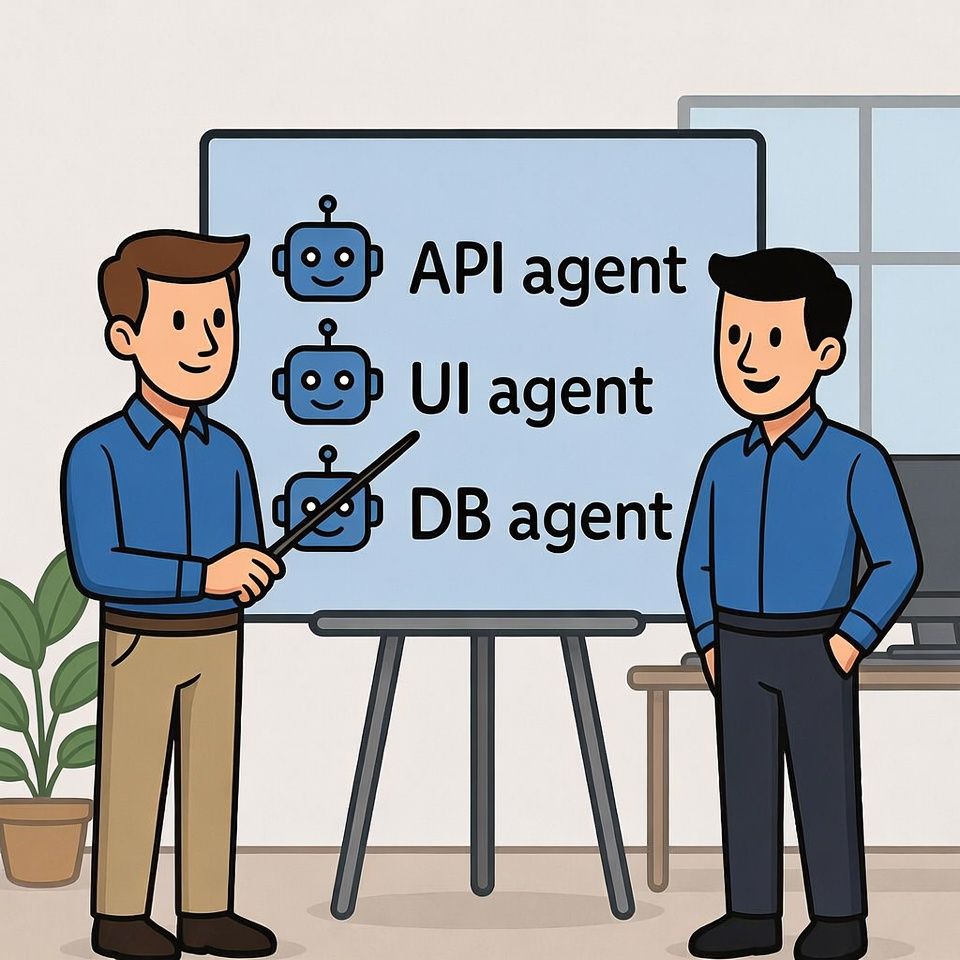
We broke AI agents into domain-specific subagents with explicit ownership of routes, types, and business rules. The codebase got better overnight.
The Problem
If you've spent any real time building software with AI coding agents, you've hit the wall. You paste your project context into a prompt, ask the agent to fix a bug or add a feature, and it confidently touches files it shouldn't, breaks conventions it doesn't know about, and produces code that technically works but violates half the rules your team spent months establishing. The agent doesn't know where the boundaries are because you never drew them.
This is the dirty secret of AI-assisted development in 2026: the tools are powerful, but a powerful tool with no constraints is just a faster way to create technical debt. We watched it happen in real time at Sequence while building Sequence Stack — a full-stack workspace management platform with project boards, scheduling, team chat, document management, user administration, and more. One codebase, dozens of API routes, multiple interrelated domains. Every time we asked an agent to work on the scheduling module, it would wander into auth logic. Ask it to fix a chat bug, and it'd refactor the database layer on its way through. The context window became a liability. The agent knew too much and understood too little.
What We Learned
Before we introduced domain agents, we had already built Sequence Stack through a painful, iterative process. We learned lessons the hard way — the kind you can only learn by shipping broken code and debugging it at midnight.
First, we learned that fallbacks are where bugs hide. We adopted a strict no-fallback policy: no silent defaults, no empty-string coercions, no try/catch blocks that swallow errors and keep going. When something fails, it fails visibly. This sounds harsh until you realize the alternative is shipping features that look fine in the UI while quietly returning garbage data. Every fallback is a lie your code tells you about its own health.
Second, we learned that ownership matters more than documentation. You can write all the READMEs you want, but if nobody owns the auth routes — really owns them, knows the business rules, knows which validation schemas guard which endpoints — then knowledge exists on paper but not in practice. Features fall through the cracks at domain boundaries. The scheduling team doesn't know the workspace team's membership model. The chat system reimplements comment logic that already exists in the collaboration layer.
Third, we learned that the shape of your codebase is the shape of your organization. When we had one big undifferentiated pile of routes and components, we got one big undifferentiated pile of problems. Cross-cutting bugs, inconsistent API design, duplicate logic in three different files. Conway's Law applies to AI agents just as much as it applies to human teams.
What You Can Do About It
We broke our AI agents into domain-specific subagents, each with a definition file that specifies exactly what it owns. Not vague guidelines — specific route files, specific types, specific database query functions, specific seed data, and specific business rules.
Here's a sample of the roster we ended up with:
- Auth & Users owns login, sessions, API keys, presence, and user management. It knows the username format rules, the password hashing strategy, and that certain identifiers must be unique per user.
- Project Board owns the board view, tasks, task comments, attachments, sprints, and archives. It knows the column statuses, the priority levels, and that completing a sprint archives finished tasks.
- Scheduling owns events and cross-workspace calendar views. It knows that cross-workspace reads require membership checks and that end dates must be after start dates.
- Collaboration owns the shared rich text editor, entity comments, entity attachments, chat messages, and organization accounts. It enforces that every comment input in the entire app must use the same shared editor component — no exceptions.
- Documents owns reports, requests for information, case files, and analytical products — the content management layer.
- Workspaces owns workspace lifecycle, membership roles, icons, and AI chat scoping.
- Design System owns badge styles, typography, color tokens, spacing, and iconography conventions.
- Feature Mapper acts as the routing brain — given a feature request or bug report, it determines which domain agent or agents own the affected code.
Each agent definition includes the exact routes it controls (with HTTP methods and validation schemas), the types it owns, the database functions in its scope, the seed data files it maintains, numbered business rules, and explicit constraints like "never leak tasks across workspaces" or "all comment inputs MUST use the shared editor."
You don't need to reorganize your entire codebase on day one. Start small. Pick two or three natural domains in your application. If you have user auth and a main feature area, that's already two. Write a definition file for each one that includes a one-paragraph identity statement, a table of the specific files and routes it controls, a list of numbered business rules, and a constraints section that says what the agent must never do.
The business rules section is where the real value lives. These aren't generic best practices — they're the specific, hard-won knowledge about your system. "Usernames are derived server-side, not typed by the caller." "Entity comments are polymorphic — they use an entity type and entity ID to attach to any resource." "Archives are read-mostly — once archived, items are not moved back."
Once your first few domain agents are working, add a Feature Mapper that routes incoming work to the right domain. Then add cross-cutting agents for testing, design consistency, and deployment. These don't own features — they own standards.
Why It Matters
Reduced blast radius. When an agent only knows about its domain, it can't accidentally break things outside its scope. The Project Board agent literally doesn't have the scheduling routes in its context, so it can't modify them even if it wanted to. Constraints become structural rather than aspirational.
Preserved institutional knowledge. Every business rule you write into a domain agent definition is a rule that survives context window limits, session resets, and model upgrades. The agent doesn't need to rediscover that chat messages support one-level threading or that workspace deletion cascades to all child resources. It's in the definition, every time.
Faster onboarding for agents and humans. When a new feature request comes in, the Feature Mapper tells you which agents need to act and in what order. When a new developer or a new AI model joins the project, they can read a single definition file and understand everything about one domain in minutes. The alternative — reading the entire codebase — doesn't scale.
Composability across boundaries. Because each agent knows its boundaries, cross-domain features become explicit collaborations rather than accidental collisions. "Let users comment on reports" maps cleanly to: Collaboration agent owns the comment CRUD, Documents agent owns the report UI that displays comments. Each agent does its part without stepping on the other.
We didn't set out to reinvent software architecture. We just got tired of AI agents that knew everything about our codebase and understood nothing about how it was supposed to work. Drawing boundaries turned out to be the single highest-leverage thing we did — not for the AI, but for the software itself. The agents just made the benefits impossible to ignore.
At Periscoped, we help teams build fast without building broken. If your AI agents are making messes instead of shipping features, we should talk.
Enjoyed this? Explore more on ai agentarchitecturesoftware devbest practices or get in touch.